
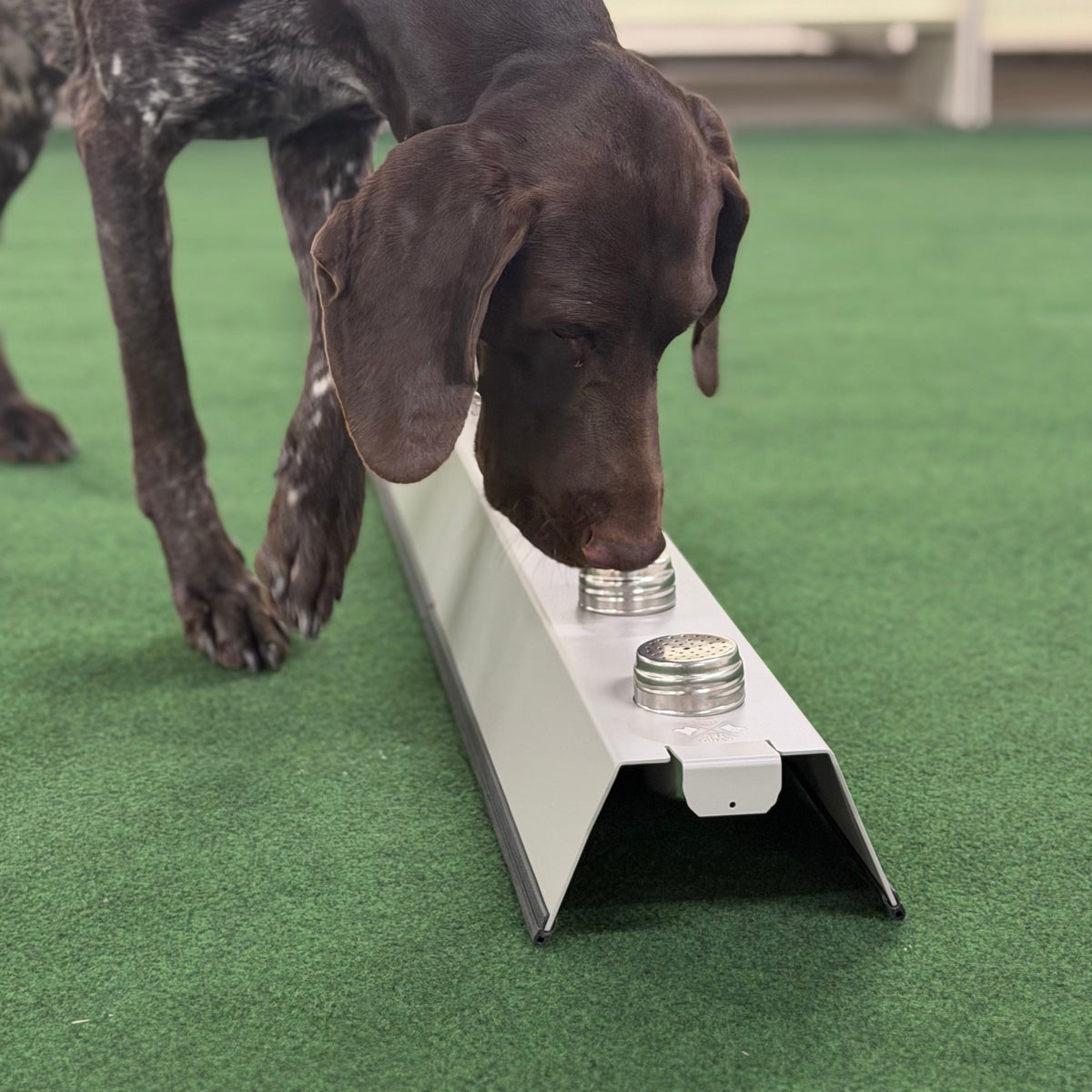
Kynotec Detection Dog Lineup – Standardized Scent Training for Professional K9 Teams
A modular scent training system for reproducible detection dog training
Reliable detection dog performance depends on more than a good nose. Training quality is influenced by how consistently odor is presented, how variables are controlled and how clearly the dog can learn which odor information is relevant.
The Kynotec Detection Dog Lineup was developed as a modular training system for professional scent detection work. It can be used from early target-odor conditioning through odor recognition, discrimination, distractor work and controlled blind testing.
12 odor positions in a modular setup
A complete Kynotec Lineup consists of four modules. Each module holds three odor positions, providing a total of 12 positions. The modules can be used individually, rearranged or connected with additional units.
This modular design allows trainers to change the training picture while keeping the presentation system consistent. The Lineup is designed for use with Kynotec stainless-steel ODDs – Odor Delivery Devices.
Why standardization matters
In scent detection training, unnecessary differences between positive, negative and distractor positions can create unintended cues. Standardized containers and repeatable layouts help reduce these variables and make training decisions easier to interpret.
A structured Lineup can support:
- target-odor conditioning
- odor recognition
- scent discrimination
- negative samples and distractors
- blank searches
- single-blind training
- double-blind training
- performance assessment
Fast odor decisions
The relatively close spacing between positions is intentional. The dog encounters multiple odor sources in a short sequence and must repeatedly decide whether each source is relevant or irrelevant. This creates a high frequency of odor-based decisions and can be used to develop precise discrimination.
The goal is not for the dog to learn a position or container. The goal is for the target odor to control the trained response.
Controlled odor presentation with ODDs
ODDs provide a consistent container format for target odors, negative samples and distractors. Using identical containers can reduce visual and construction differences between positions. Good handling protocols remain essential because no container can compensate for poor contamination control.
Single- and double-blind training
Standardized positions are particularly useful for blind training. Positions can be randomized and the handler can work without relying on prior knowledge of the target location. This helps reduce unintentional handler cueing and supports more objective evaluation of the dog’s search behavior and trained final response.
Designed for mobile professional training
The Lineup uses a lightweight aluminum construction and is stackable for transport. This allows trainers to move the system between training areas and work in different environments rather than relying on one permanent setup.
Training documentation
Professional detection dog training should be documented. Recording target odors, positions, responses, false alerts and training outcomes makes progress easier to evaluate and supports more deliberate training decisions.
Frequently asked questions
How many odor positions does one Kynotec Lineup provide?
Four modules with three positions each provide 12 odor positions.
Can the system be expanded?
Yes. Additional modules and Lineups can be connected to create larger training configurations.
What is the Lineup used for?
Typical applications include odor conditioning, recognition, discrimination, distractor training, blank work and controlled single- or double-blind exercises.
Why are the positions close together?
The layout is designed to create frequent decisions between relevant and irrelevant odor information.
Conclusion
The Kynotec Detection Dog Lineup combines modular hardware with a standardized approach to scent presentation. Its purpose is simple: reduce unnecessary variables, create repeatable training conditions and let the dog’s odor-based decision making remain the focus.
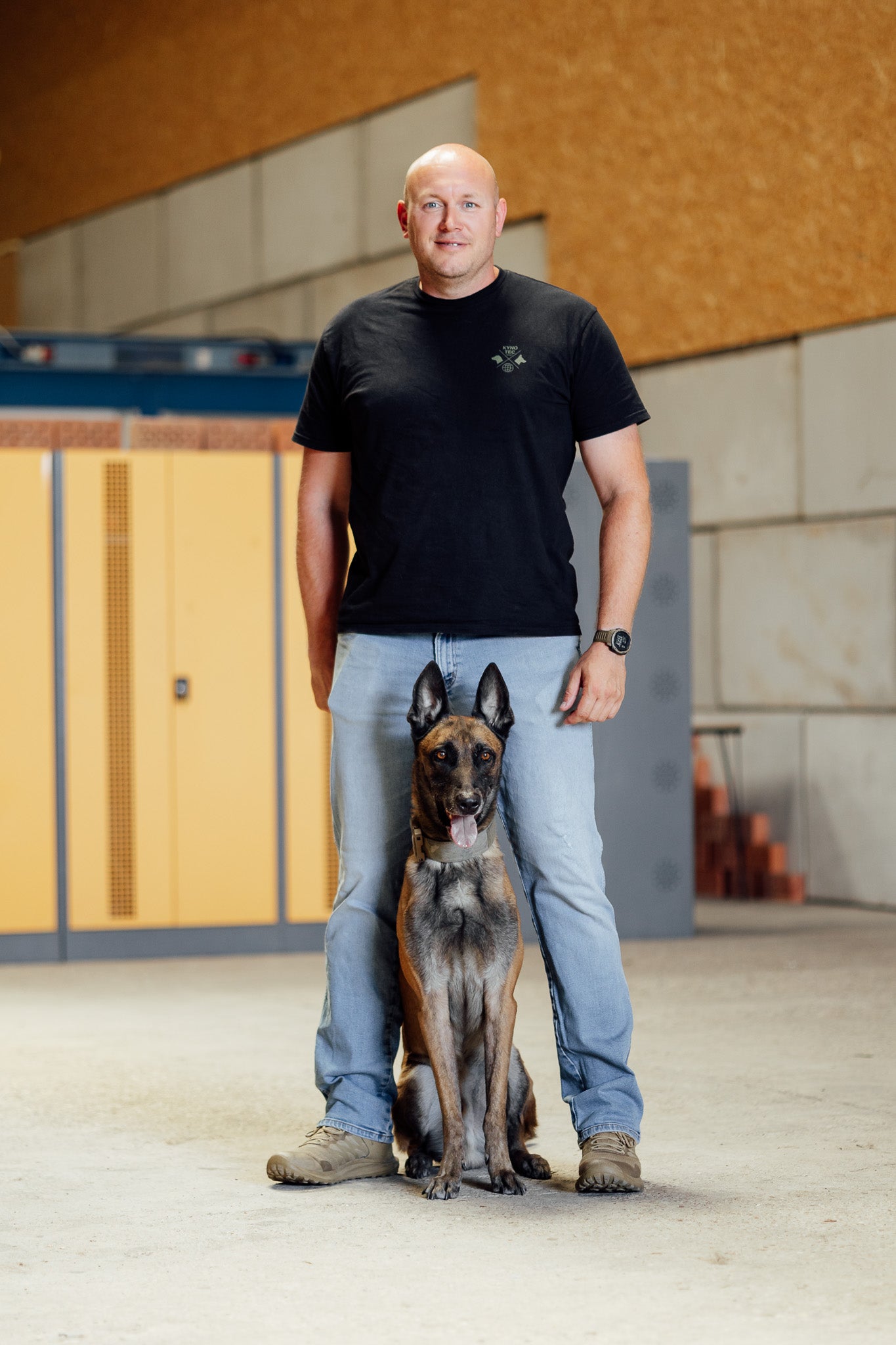
Written by Christoph Wishofer · Expertenprofil
Geschäftsführer der Kynotec GmbH und Experte für professionelle Dienst- und Spürhundearbeit. Langjährige Erfahrung in der Ausbildung von Diensthunden, Hundeführern und Hundetrainern sowie als Frontex General Use Dog Instructor.


Leave a comment
This site is protected by hCaptcha and the hCaptcha Privacy Policy and Terms of Service apply.